Florida Memory is administered by the Florida Department of State, Division of Library and Information Services, Bureau of Archives and Records Management. The digitized records on Florida Memory come from the collections of the State Archives of Florida and the special collections of the State Library of Florida.
Despite the world's hopes that World War I would be the "war to end all wars," too much unresolved tension eventually grew into another global conflict when Germany invaded Poland on September 1, 1939. Although the fall of 1939 marked the formal beginning of World War II, the foundation was laid over the course of the 20 years between the two wars. The invasion of Poland was merely the turning point.
World War II was larger and more devastating than the First World War. Both the Allies and Axis Powers lost millions of soldiers, and tens of millions of civilians died worldwide. Even after the war officially ended, many more died from war-related diseases and famine. Among the dead were six million Jewish men, women and children murdered by Nazi Germany during the Holocaust alongside millions of non-Jewish people who were also unwelcome according to the Nazi Party's views.
The United States joined World War II after the Empire of Japan attacked the U.S. naval base at Pearl Harbor on December 7, 1941.
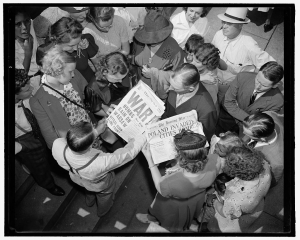
Harris & Ewing, [People Looking at DC Newspapers on Sept. 1, 1939, the Day the Invasion of Poland Began], [1938 or 1939], Library of Congress, Harris & Ewing Photograph Collection, 2016876153.
September 1, 1939
World War II Begins in Europe
On September 1, 1939, German troops invaded Poland. The Soviet Union invaded Eastern Poland a few weeks later, forcing the Polish government to flee the country. This event marked the beginning of World War II in Europe, and the United Kingdom and France declared war on Germany.
Learn More
Samuel K. Eddy and Douglas W. Richmond, "Germany Invades Poland," EBSCO Research Starter, last modified 2023.
Examine causes, course, and consequences of World War II on the United States and the world.
Examples may include, but are not limited to, rise of dictators, attack on Pearl Harbor, Nazi party, American neutrality, D-Day, Battle of the Bulge, War in the Pacific, internment camps, Holocaust, Yalta.
02/14
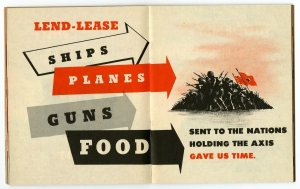
U.S. War Department, Invisible Weapon, Lend-Lease Booklet, 1944, Florida Memory, State Library of Florida, Federal Documents Collection, FED_W1_20-13.
March 11, 1941
Roosevelt Signs the Lend-Lease Act
On March 11, 1941, President Roosevelt signed the Lend-Lease Act into law. The law allowed the U.S. to lend other countries weapons, food and other supplies to support the Allied Nations' fight against the Axis Powers during World War II.
Learn More
"Lend-Lease Act (1941)," U.S. National Archives and Records Administration, last modified June 28, 2022.
Examine causes, course, and consequences of World War II on the United States and the world.
Examples may include, but are not limited to, rise of dictators, attack on Pearl Harbor, Nazi party, American neutrality, D-Day, Battle of the Bulge, War in the Pacific, internment camps, Holocaust, Yalta.
Describe the United States response in the early years of World War II (Neutrality Acts, Cash and Carry, Lend Lease Act).
02/14
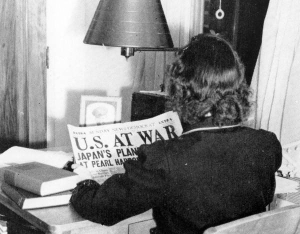
An FSCW Student Reading Newspaper About Pearl Harbor Attack - Tallahassee, Florida., 7 December 1944, Florida Memory, Reference Collection, RC01345.
December 7, 1941
Japan Attacks Pearl Harbor
On December 7, 1941, Japan attacked Pearl Harbor, and on December 8 the United States entered World War II. Florida became an important training location for American soldiers, sailors and airmen.
Learn More
"Attack on Pearl Harbor," U.S. National Archives and Records Administration, last modified December 16, 2024.
Holocaust Encyclopedia "Pearl Harbor," (Washington, DC: United States Holocaust Memorial Museum, 2025), accessed August 20, 2025.
Examine causes, course, and consequences of World War II on the United States and the world.
Examples may include, but are not limited to, rise of dictators, attack on Pearl Harbor, Nazi party, American neutrality, D-Day, Battle of the Bulge, War in the Pacific, internment camps, Holocaust, Yalta.
Examples may include, but are not limited to, warfare near Florida's shores and training bases in Florida (Miami, Tampa, Tallahassee, etc.), spying near the coast, Mosquito Fleet.
02/14
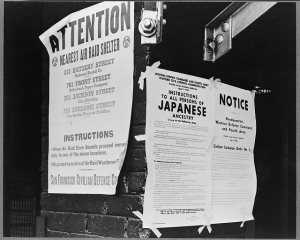
Civilian Exclusion Order #5, Posted at First and Front Streets, Directing Removal by April 7 of Persons of Japanese Ancestry, From the First San Francisco Section to Be Affected by Evacuation, April 1942, Library of Congress, Farm Security Administration and Office of War Information Collection, 2001705937.
February 19, 1942
President Roosevelt Orders the Internment of Japanese Americans
On February 19, 1942, President Franklin D. Roosevelt signed Executive Order 9066, which authorized the forced removal of "any or all persons" thought to be a threat to national security on the West Coast. It resulted in the mass incarceration of roughly 120,000 people of Japanese descent, two thirds of whom were American citizens.
Examine causes, course, and consequences of World War II on the United States and the world.
Examples may include, but are not limited to, rise of dictators, attack on Pearl Harbor, Nazi party, American neutrality, D-Day, Battle of the Bulge, War in the Pacific, internment camps, Holocaust, Yalta.
Examine efforts to expand or contract rights for various populations during World War II.
Examples may include, but are not limited to, women, African Americans, German Americans, Japanese Americans and their internment, Native Americans, Hispanic Americans, Italian Americans.
Explain the impact of World War II on domestic government policy including, but not limited to, rationing and the forced internment of Japanese Americans.
05/24
First 29 Navajo U.S. Marine Corps Code-Talker Recruits Being Sworn in at Fort Wingate, NM, National Archives at Riverside, 295175.
1942
First 29 Navajo Code Talkers Arrive at Camp Pendleton
In May 1942, the U.S. Marine Corps recruited the first 29 Navajo (or Diné) code talkers. At Camp Pendleton, the men developed a strategy for encrypting messages using a coded version of the Navajo language. Between 400 and 500 Native Americans from many tribes served in both World Wars as code talkers.
Examine causes, course, and consequences of World War II on the United States and the world.
Examples may include, but are not limited to, rise of dictators, attack on Pearl Harbor, Nazi party, American neutrality, D-Day, Battle of the Bulge, War in the Pacific, internment camps, Holocaust, Yalta.
02/14
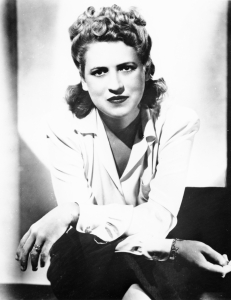
Jacqueline Cochran - Internationally Known Woman Aviator, circa 1900, Florida Memory, Reference Collection, RC12184.
August 5, 1943
The Women Airforce Service Pilots (WASPs) Forms
During World War II, the Women Airforce Service Pilots (WASP) formed through the merger of two other Army Air Force organizations. Florida's own Jacqueline "Jackie" Cochran was appointed director of the WASPs in 1943.
Examine causes, course, and consequences of World War II on the United States and the world.
Examples may include, but are not limited to, rise of dictators, attack on Pearl Harbor, Nazi party, American neutrality, D-Day, Battle of the Bulge, War in the Pacific, internment camps, Holocaust, Yalta.
Examples may include, but are not limited to, warfare near Florida's shores and training bases in Florida (Miami, Tampa, Tallahassee, etc.), spying near the coast, Mosquito Fleet.
02/14
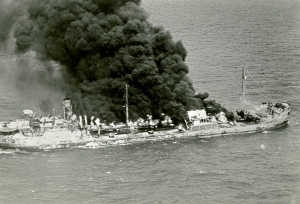
Tanker "Gulfland" Burning in the Water - Hobe Sound, Florida, 1943, Florida Memory, Reference Collection, RC10679.
October 21, 1943
Tanker Accident Along the Florida Coast
The Gulfland and the Gulfbelle, two American tankers, collided on October 21, 1943. The Gulfland had been carrying gasoline, and both tankers caught fire. The tankers had been traveling without lights to avoid German submarines.
Learn More
"Gulfland," United States Navy Memorial, accessed August 20, 2025.
"Gulfbelle," United States Navy Memorial, accessed August 20, 2025.
Examine causes, course, and consequences of World War II on the United States and the world.
Examples may include, but are not limited to, rise of dictators, attack on Pearl Harbor, Nazi party, American neutrality, D-Day, Battle of the Bulge, War in the Pacific, internment camps, Holocaust, Yalta.
Examples may include, but are not limited to, warfare near Florida's shores and training bases in Florida (Miami, Tampa, Tallahassee, etc.), spying near the coast, Mosquito Fleet.
02/14
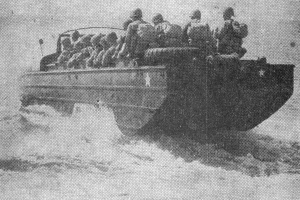
Amphibian Training at Camp Gordon Johnston, 1943, Florida Memory, Print Collection, PR13573.
June 6, 1944
D-Day aka the Normandy Landings
On June 6, 1944, Allied Forces landed on the beaches of Normandy, France, and fought the German army. This was a major step toward the Allies winning the war in Europe. Some of the training for D-Day took place at Camp Gordon Johnston near Carabelle, Florida.
Examine causes, course, and consequences of World War II on the United States and the world.
Examples may include, but are not limited to, rise of dictators, attack on Pearl Harbor, Nazi party, American neutrality, D-Day, Battle of the Bulge, War in the Pacific, internment camps, Holocaust, Yalta.
Examples may include, but are not limited to, warfare near Florida's shores and training bases in Florida (Miami, Tampa, Tallahassee, etc.), spying near the coast, Mosquito Fleet.
02/14
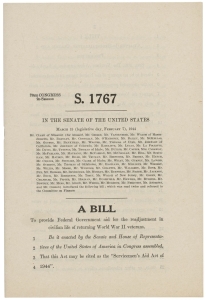
Act of June 22, 1944 [Servicemen's Readjustment Act [G.I. Bill of Rights]], 22 June 1944, National Archives at Riverside, Enrolled Acts and Resolutions of Congress, 299854.
June 22, 1944
President Roosevelt Signs the G.I. Bill
The Servicemen's Readjustment Act of 1944, nicknamed the G.I. Bill, helped veterans transition back into civilian life by providing unemployment compensation for a year, low-cost mortgages, low-interest business or farm loans, and educational benefits.
Identify causes for Post-World War II prosperity and its effects on American society.
Examples may include, but are not limited to, G.I. Bill, Baby Boom, growth of suburbs, Beatnik movement, youth culture, religious revivalism (e.g., Billy Graham and Bishop Fulton J. Sheen), conformity of the 1950s and the protest in the 1960s.
02/14
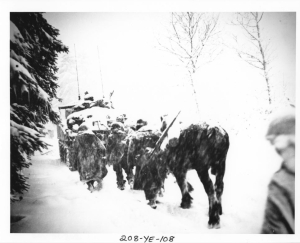
Photograph of American Infantrymen and a Horse Trudging Behind an Armored Vehicle in the Snow-covered Ardennes Forest, [between 1941–1945], National Archives at College Park, Yanks in the ETO, 12010190.
December 16, 1944
Battle of the Bulge (Ardennes Offensive) Begins
The Battle of the Bulge began with a surprise attack on December 16, 1944. It was Germany's last attempt to repel the Allied armies on the Western Front. After a month-long battle in sub-zero temperatures, the Allies defeated the German forces.
Learn More
Holocaust Encyclopedia "Battle of the Bulge," (Washington, DC: United States Holocaust Memorial Museum, 2025), accessed August 20, 2025.
Examine causes, course, and consequences of World War II on the United States and the world.
Examples may include, but are not limited to, rise of dictators, attack on Pearl Harbor, Nazi party, American neutrality, D-Day, Battle of the Bulge, War in the Pacific, internment camps, Holocaust, Yalta.
02/14
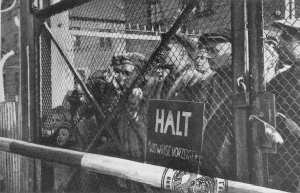
Inmates at the Gate to the Auschwitz Concentration Camp, After 1945 January 27, United States Holocaust Memorial Museum, courtesy of National Archives and Records Administration at College Park, 85902.
January 27, 1945
Soviet Troops Liberate Auschwitz
On January 27, 1945, the Soviet Union's Red Army liberated Auschwitz, a group of concentration camps in German-occupied Poland. German forces deported at least 1.3 million Jewish people, Polish people, Roma, Soviet prisoners of war, and more to the camp between 1940 and 1945. An estimated 1.1 million people were murdered.
Examine causes, course, and consequences of World War II on the United States and the world.
Examples may include, but are not limited to, rise of dictators, attack on Pearl Harbor, Nazi party, American neutrality, D-Day, Battle of the Bulge, War in the Pacific, internment camps, Holocaust, Yalta.
Analyze the impact of the Holocaust during World War II on Jews as well as other groups.
02/14
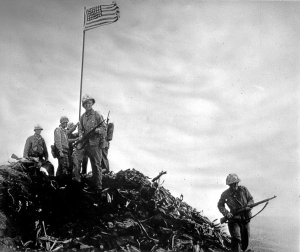
Members of 40 Man Patrol Planting First American Flag at Iwo Jima, 23 February 1945, Florida Memory, Print Collection, PR14080.
February 19, 1945
Battle of Iwo Jima
Three U.S. Marine divisions landed on Iwo Jima on February 19, 1945. It was a strategically important island in the war. One of the men who planted the first American flag on the highest point of the island was Platoon Sergeant Ernest I. "Boots" Thomas Jr. of Monticello, Florida.
Examine causes, course, and consequences of World War II on the United States and the world.
Examples may include, but are not limited to, rise of dictators, attack on Pearl Harbor, Nazi party, American neutrality, D-Day, Battle of the Bulge, War in the Pacific, internment camps, Holocaust, Yalta.
Examples may include, but are not limited to, warfare near Florida's shores and training bases in Florida (Miami, Tampa, Tallahassee, etc.), spying near the coast, Mosquito Fleet.
02/14
Photograph of Prisoners at Dachau Concentration Camp, National Archives at College Park, 26328396.
April 29, 1945
American Forces Liberate Dachau
Dachau was one the first concentration camps built by the Nazi Party, and they imprisoned more than 200,000 people in the camp between 1933 and 1945. American forces liberated Dachau on April 29, 1945, and freed more than 30,000 Jewish people and political prisoners.
Learn More
Holocaust Encyclopedia "Dachau," (Washington, DC: United States Holocaust Memorial Museum, 2024), accessed August 21, 2025.
Examine causes, course, and consequences of World War II on the United States and the world.
Examples may include, but are not limited to, rise of dictators, attack on Pearl Harbor, Nazi party, American neutrality, D-Day, Battle of the Bulge, War in the Pacific, internment camps, Holocaust, Yalta.
Analyze the impact of the Holocaust during World War II on Jews as well as other groups.
02/14
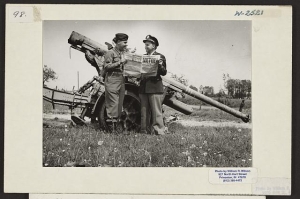
[William R. Wilson (Right) and Brother Cpl. Jack Wilson (Left) Standing by a German 88 Mm Gun at Verdun, France on VE Day], 1945, Library of Congress, 2007683599.
May 8, 1945
Nazi Germany Surrenders to the Allied Forces
On May 7, 1945, representatives of the Allied Powers and Germany met at the Allies' headquarters in France to sign a formal surrender document. The Soviet Union demanded some changes to the documents, and so another document called the German Instrument of Surrender was signed on May 8 in Berlin, Germany.
Learn More
"Surrender of Germany (1945)," U.S. National Archives and Records Administration, last modified January 10, 2023.
Examine causes, course, and consequences of World War II on the United States and the world.
Examples may include, but are not limited to, rise of dictators, attack on Pearl Harbor, Nazi party, American neutrality, D-Day, Battle of the Bulge, War in the Pacific, internment camps, Holocaust, Yalta.
02/14
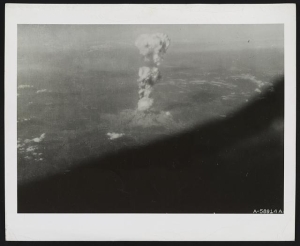
First Atomic Bombing of Hiroshima, Japan by B-29 Superfortresses on August 6, 1945, [1945], Library of Congress, 2017659326.
August 6, 1945
The U.S. Drops an Atomic Bomb on Hiroshima
On August 6, 1945, Colonel Paul W. Tibbets flew the Enola Gay, a B-29 bomber, over the city of Hiroshima and released a uranium atomic bomb nicknamed Little Boy. Between 70,000 and 80,000 people died in the initial explosion and more died in the resulting firestorm or from exposure to radiation.
Examine causes, course, and consequences of World War II on the United States and the world.
Examples may include, but are not limited to, rise of dictators, attack on Pearl Harbor, Nazi party, American neutrality, D-Day, Battle of the Bulge, War in the Pacific, internment camps, Holocaust, Yalta.
Analyze the use of atomic weapons during World War II and the aftermath of the bombings.
02/14
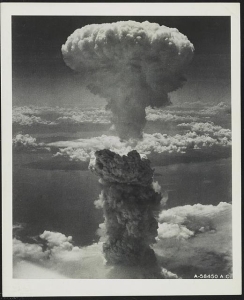
United States Army Air Forces, photographer, Nagasaki, Japan Under Atomic Bomb Attack, [9 August 1945], Library of Congress, 2002722137.
August 9, 1945
The U.S. Drops an Atomic Bomb on Nagasaki
On August 9, 1945, three days after bombing Hiroshima, U.S. forces dropped a second atomic bomb on the Japanese city of Nagasaki. The second atomic bomb, nicknamed Fat Man, detonated 1,650 feet over the city. An estimated 40,000 people died that day and more than 100,000 would die over the next five years.
Examine causes, course, and consequences of World War II on the United States and the world.
Examples may include, but are not limited to, rise of dictators, attack on Pearl Harbor, Nazi party, American neutrality, D-Day, Battle of the Bulge, War in the Pacific, internment camps, Holocaust, Yalta.
02/14
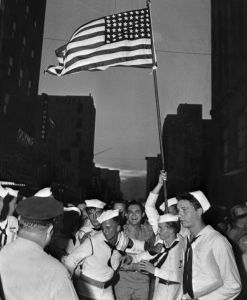
Navy Sailors Celebrating V-J Day - Miami, Florida, 1945, Florida Memory, Print Collection, PR13642.
August 15, 1945
Imperial Japan Surrenders to the Allied Forces
Victory over Japan Day (V-J Day) was the day Imperial Japan surrendered to the Allied Forces during World War II. Because of the difference in time zones, Japan surrendered on August 15, 1945, but it was announced in the Western Hemisphere on August 14. The agreement was formally signed on September 2.
Learn More
"V-J Day," The National WWII Museum, accessed August 21, 2025.
Examine causes, course, and consequences of World War II on the United States and the world.
Examples may include, but are not limited to, rise of dictators, attack on Pearl Harbor, Nazi party, American neutrality, D-Day, Battle of the Bulge, War in the Pacific, internment camps, Holocaust, Yalta.
02/14
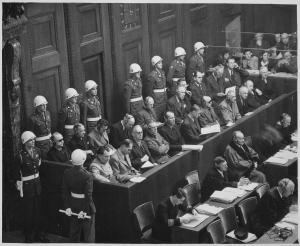
Nuremberg Trials. Looking Down on Defendants Dock, circa 1945-1946, National Archives at College Park, 540127.
November 20, 1945
The Nuremberg Trials Begin
From 1945 to 1949, judges from the United States, the United Kingdom, France and the Soviet Union found 161 Nazi officials guilty of crimes against humanity, crimes against peace, and war crimes, including the murder of millions during the Holocaust. The trials were not only about punishment but also showing the world what had happened and making sure it would not happen again. The main trial, held before an International Military Tribunal, began on November 20, 1945.
Learn More
"Justice at Nuremberg," Harry S. Truman Library & Museum, accessed December 4, 2025.
Holocaust Encyclopedia "Nuremberg Trials," (Washington, DC: United States Holocaust Memorial Museum, 2025), accessed December 4, 2025.
These primary source sets contain documents and photos arranged by topic that teachers can use in their lesson plans. Each set is accompanied by a teacher's guide containing historical context, teaching suggestions, and relevant NGSSS and Florida Standards.

 Listen: The Blues Program