| SS.912.A.7.6 |
Assess key figures and organizations in shaping the Civil Rights Movement and Black Power Movement. |
Examples may include, but are not limited to, the NAACP, National Urban League, SNCC, CORE, James Farmer, Charles Houston, Thurgood Marshall, Rosa Parks, Constance Baker Motley, the Little Rock Nine, Roy Wilkins, Whitney M. Young, A. Philip Randolph, Dr. Martin Luther King, Jr., Robert F. Williams, Fannie Lou Hamer, Malcolm X [El-Hajj Malik El-Shabazz], Stokely Carmichael [Kwame Ture], H. Rap Brown [Jamil Abdullah Al-Amin], the Black Panther Party [e.g., Huey P. Newton, Bobby Seale]. |
02/14 |
| SS.912.AA.4.5 |
Compare differing organizational approaches to achieving equality in America. |
Clarifications 1: Instruction includes the immediate and lasting effects of modern civil rights organizations (e.g., The National Association for the Advancement of Colored People [NAACP], Congress of Racial Equality [CORE], Southern Christian Leadership Conference [SCLC], Student Non-Violent Coordinating Committee [SNCC], Black Panther Party [BPP], Highlander Folk School, religious institutions).
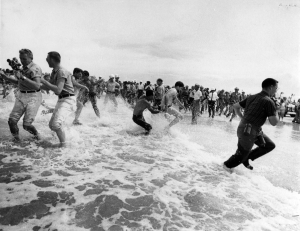
Clarification 2: Instruction includes different methods used by coalitions (i.e., freedom rides, wade-ins, sit-ins, boycotts, protests, marches, voter registration drives, media relations). |
05/24 |
| SS.912.AA.4.9 |
Examine the key people who helped shape modern civil rights movement (e.g., Dr. Martin Luther King Jr., Claudette Colvin, Rosa Parks, Stokely Carmichael, Fannie Lou Hamer, Freedom Riders, A. Philip Randolph, Malcolm X, Justice Thurgood Marshall, Mamie Till Mobley, Diane Nash, Coretta Scott King, John Lewis, Medgar Evers). |
Clarification 1: Instruction includes local individuals in civil rights movements.
|
05/24 |
| SS.4.A.8.1 |
Identify Florida's role in the Civil Rights Movement. |
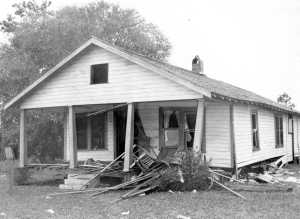
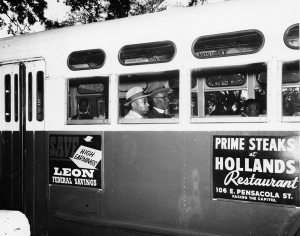
Examples may include, but are not limited to, Tallahassee Bus Boycotts, civil disobedience, and the legacy of early civil rights pioneers, Harry T. and Harriette V. Moore. |
02/14 |

 Listen: The Blues Program